
Characterizing Italian Indie Games 2010-2025
Can we speak of an “Italian character” in video games developed in Italy?

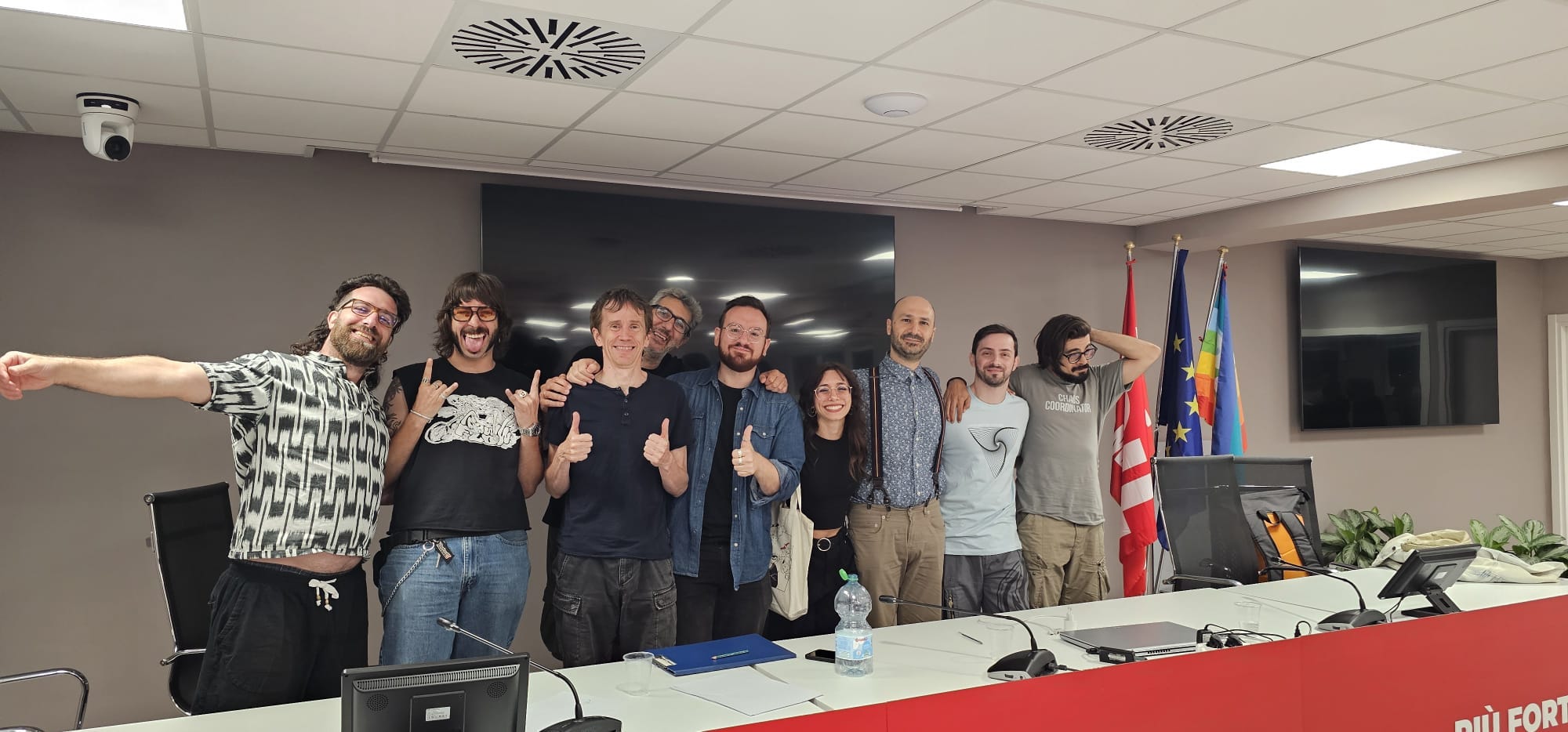
This post follows a remarkable meeting held in Rome on June 16, 2026 thanks to Ex Machina Roma, where the title theme was discussed, with Federico Simonetti, Lorenzo Castelli, Francesco Morando and Mattia Traverso.
Can we speak of an “Italian character” in video games developed in Italy?
Italian independent development has produced a disproportionate number of political games and experimental narrative structures. Molleindustria pioneered political and critical game design before it became common internationally, while many other indie developers explored unconventional storytelling, Italian history, folklore, with social critique aims.
“Italy” is considered here as the location and nationality of the core development team, not of the game environment. For “games about Italy as territory, story and culture”, that is not a theme of this discussion, there is an association that works on that, IVIPRO.

“Now you get to play the newest kind of soldier: one who remotely drops bombs on foreign soil during the day, and at night goes home to his family in the suburbs.” Unmanned
I propose two dimensions through which Italian independent game production can be understood: memory and crisis. These dimensions do not encompass every game made in Italy, nor do they apply to works produced primarily as outsourced commercial products. My selection is just basically “games I like”, if you want 😂. So I am not considering games that are a rehash of stuff already seen, or commissions from corporate, so that content creativity did not play any role. For sure, I missed many games that deserve consideration, but peace.
Underlying both memory and crisis is a broader cultural heritage. Italian craftsmanship and artistic production are shaped by layers of pagan, Christian, medieval, Renaissance, and modern history. Italian culture often embraces contradiction: tragedy and comedy coexist, the tradition of commedia all’italiana, exemplified by directors such as Mario Monicelli and Dino Risi, often derives its power from the tension between what characters desire and what reality allows—a kind of narrative dissonance that finds echoes in contemporary Italian games.
This relationship with memory is inseparable from crisis. The cultural studies theorist Mark Fisher described contemporary society as being haunted by “lost futures”: futures once promised but never realised.
Production, Craftsmanship, and Cultural Density
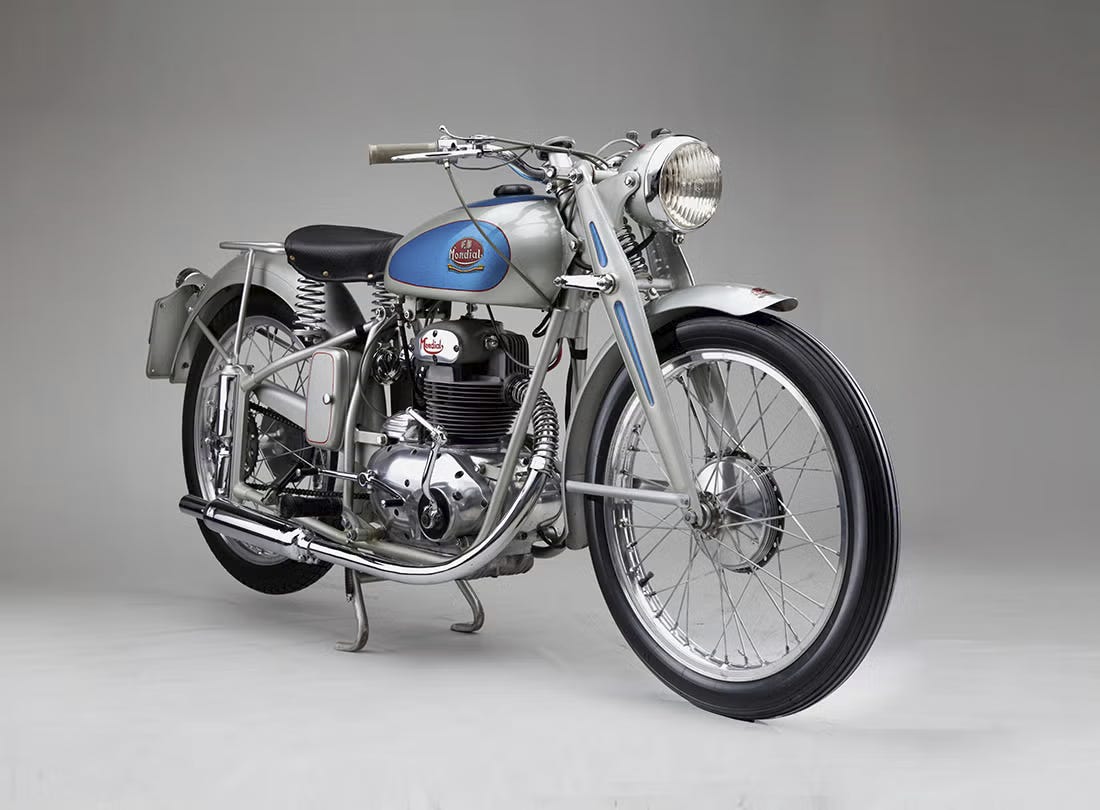
From Moto Bellissima.
Italy has historically been a country of makers. Its economy has long been characterised by networks of small and medium-sized enterprises, workshops, artisans, and family businesses. This culture of production values craftsmanship not simply as a technical skill but as a source of dignity and identity.
The opening article of the Italian Constitution states: “Italy is a democratic Republic founded on labour.” Labour here is not merely economic activity but a cultural value.
The post-war decades, particularly from 1945 to the late 1970s, saw an extraordinary density of cultural production in literature, cinema, design, architecture, and visual arts. This period remains a powerful point of reference for contemporary Italian creators.
Italian games often inherit this sensibility. They are frequently handcrafted rather than industrially manufactured, shaped by small teams with strong artistic visions. Their relationship to production resembles artisanal creation more than mass entertainment.
Memory and Recollection
One recurring characteristic of Italian games is their engagement with collective memory. These works revisit historical events and social changes from unconventional perspectives. Examples follow.
20 Mesi
Studio: We Are Müesli
A narrative exploration of the Italian Resistance through the experiences of ordinary people rather than military heroes.
Wheels of Aurelia
Studio: Santa Ragione
A road trip through 1970s Italy where political tensions and personal stories unfold through conversations on the Via Aurelia.
Slaps and Beans
Studio: Trinity Team
A retro beat-’em-up celebrating the cinematic legacy of Bud Spencer and Terence Hill through humour, brawls, and nostalgia.
The Town of Light
Studio: LKA
An exploration of psychiatric institutions before the Basaglia reforms of the 70s, turning historical trauma into interactive memory.
Football Drama
Studio: Open Lab Games
A narrative football-management game about ethics, power, and personal compromise.
Hundred Days
Studio: Broken Arms Games
A winemaking simulator that transforms an iconic Italian craft into a strategic system
Myth, Folklore, and Local Histories
Italian games frequently draw upon local myths, religious traditions, folklore, and historical layers accumulated over centuries.
Becoming Saint
Studio: Open Lab Games
A strategy game about building a religious movement in medieval Italy.
The Great Palermo
Studio: We Are Müesli
A game rooted in Sicilian folklore and regional identity, showing the cultural richness of southern Italy.
Saturnalia
Studio: Santa Ragione
A folk-horror adventure inspired by Sardinian traditions and Italian giallo cinema.
This last games represent a bridge between memory and the second dimension of Italian game production: crisis.
Crisis
If memory looks toward a lost or imagined past, crisis confronts the instability of the present. Modern Italy faces multiple forms of crisis: economic stagnation, demographic decline, precarious employment, housing difficulties, political fragmentation, and the erosion of traditional forms of social belonging. These conditions increasingly shape Italian cultural production.
In this sense, many contemporary Italian games can be read as responses to the effects of globalisation, financialisation, and the neoliberal politics of European countries. While the post-war period promised collective advancement through labour and production, contemporary generations often experience uncertainty and diminished expectations.
Still There
Studio: Ghostshark & Demigiant
Evade the past, welcome oblivion, make the perfect Italian coffee. Still There is a psychological adventure game about grief and dark humour.
Mediterranea Inferno
Studio: Santa Ragione
A portrait of a generation struggling with desire, disillusionment, and stagnation.
Loan Shark
Studio: Studio Ortica
A horror game where debt, exploitation, and social anxiety become monsters of everyday life.
Horses
Studio: Santa Ragione & Andrea Lucco Borlera
An experimental work exploring contemporary alienation through surreal imagery and interaction.
Hell is Others
Studio: Yonder & Strelka Games
A noir extraction shooter where blood functions as currency, turning survival, scarcity, and exploitation into the core mechanics of everyday life.
In Their Shoes
Studio: We Are Müesli
A simulation of contemporary urban life that explores precarity, housing, work, and social pressure.
Conclusion
Italian games do not possess a single defining essence. However, many of the country’s most distinctive works share a common orientation toward memory and crisis.
On one side, they revisit history, folklore, religion, cinema, and craftsmanship. On the other, they confront economic precarity, social fragmentation and generational disappointment.
Their distinctive quality lies in exploring the tension between memory and crisis: a culture rich in history confronting an uncertain present.
Rather than offering heroic solutions, they frequently adopt a tragicomic stance inherited from other media.
The tension between these two dimensions may itself constitute the most recognisable Italian characteristic. Italian games often look backwards and forward simultaneously: they are haunted by the richness of cultural memory while struggling to make sense of a present marked by uncertainty.
If there is an Italian character in Italian games, it may reside precisely in this dialogue between remembrance and crisis.

Francesca Zacchia (Yonder) and Pietro Polsinelli (Open Lab) being indie and a bit pissed off.
Splendida riflessione! La dicotomia memoria e crisi anche se non in opposizione netta rendono bene l'idea della disillusione dettata da un passato pesante e un presente che non ci aiuta a sostenerlo.